Two tests, and the order is not published yet
Under the DEA notice of intent in Federal Register 2026-20943 (14 October 2026), 7-hydroxymitragynine (7-OH) and mitragynine pseudoindoxyl (MGPI) would be placed in Schedule I when either substance alone, or both combined, is above a threshold. The concentration test is greater than 1 mg per gram in solids, or greater than 1 mg per milliliter in liquids. The ratio test trips when the mass of mitragynine divided by the mass of 7-OH, or of MGPI, or of the two combined, is less than 100. The temporary order will not be published before 13 November 2026.
This is a regulatory summary for importers, not legal advice, and not a finding that material under the line is lawful in your state or safe to sell. Request a lot CoA and spec sheet. We reply within 1 business day. Kratom Thai Exports does not sell 7-OH concentrates, isolates, or semi-synthetic alkaloids.
Read the notice itself: https://www.federalregister.gov/documents/2026/10/14/2026-20943/schedules-of-controlled-substances-temporary-placement-of-7--hydroxymitragynine-and-mitragynine and the Department of Justice note of 9 October 2026: https://www.justice.gov/opa/pr/department-justice-announces-updates-emergency-scheduling-actions-7-oh-and-related-opioid
What the notice actually covers
The notice is issued under the temporary scheduling provision, 21 U.S.C. 811(h). It replaces an earlier July 2026 approach to 7-OH. DEA withdrew that earlier notice in the same issue of the Federal Register. Separately, a temporary order on 26 August 2026 already placed MGPI, MGM-15 and MGM-16 in Schedule I without a threshold (91 FR 54948). That MGPI order stays in effect until it expires or a new order withdraws it. MGM-15 and MGM-16 are not given a threshold in the October notice. Treat them as already scheduled.
HHS described the October threshold in a letter dated 8 October 2026. DEA's summary says the new line is meant to separate trace amounts from products that have been intentionally enhanced or concentrated. The same summary says neither HHS nor DEA has found that below-threshold material is safe to use. Do not read the threshold as a safety clearance.
The notice is not the order. Until the order is published, the October text is a notice of intent. Plan documents and contracts as if the date can arrive on or after 13 November 2026, and have counsel read the final order when it is printed. Refresh this page against that order. It will not update itself.
Published figures for leaf chemistry, not a specification of our lots
A 22 October 2026 paper in Frontiers in Pharmacology, 'Defining kratom: evidence-based policy guidelines' (doi 10.3389/fphar.2026.1925809), proposes a leaf definition in which mitragynine is about 0.5% to 2.5% of dried leaf weight, and 7-hydroxymitragynine is not above 0.01% by weight. The same paper reports that 7-OH has been measured in some post-harvest leaf at about 0.003% to 0.04% by weight. Those are research findings about leaf in the literature. They are not a certificate for any lot we coordinate, and they are not a claim about effects.
Worked arithmetic, so the two tests are visible. It is not a lot result. Take 1.5% mitragynine, which is 15 mg per gram, and 0.01% 7-OH, which is 0.1 mg per gram. The concentration is under 1 mg/g. The ratio is 15 divided by 0.1, or 150:1, which is not under 100. Now take the top of the trace range the paper cites, 0.04% 7-OH, which is 0.4 mg per gram. That is still under 1 mg/g, but 15 divided by 0.4 is 37.5, which is under 100. A figure that passes the mg/g test can still fail the ratio test. Importers should calculate both from the lot CoA.
How to read a percentage, including basis, is in Understanding MIT % and CoAs.
Why an extract needs both numbers, not just mg/g
Concentration can raise mitragynine and 7-OH together. If both move by the same factor, the ratio stays similar and the mg/g figure climbs. If 7-OH is enriched more than mitragynine, the ratio falls even when someone only quotes the mitragynine percentage. A freebase or saltbase powder also has to say which basis the percentage uses. That commercial distinction is in Freebase vs saltbase.
The formats we coordinate are natural leaf, milled powder and extract, with a lot CoA when the panel was written into the quote. We do not supply 7-OH concentrates, 7-OH isolates, MGPI, MGM-15, MGM-16, or other semi-synthetic alkaloids. The product page for extract formats is mitragynine extracts. Nothing on that page is a claim that an extract sits under the federal threshold. The lot CoA is the document that answers the question for that lot.
CoA fields to require before you approve a lot
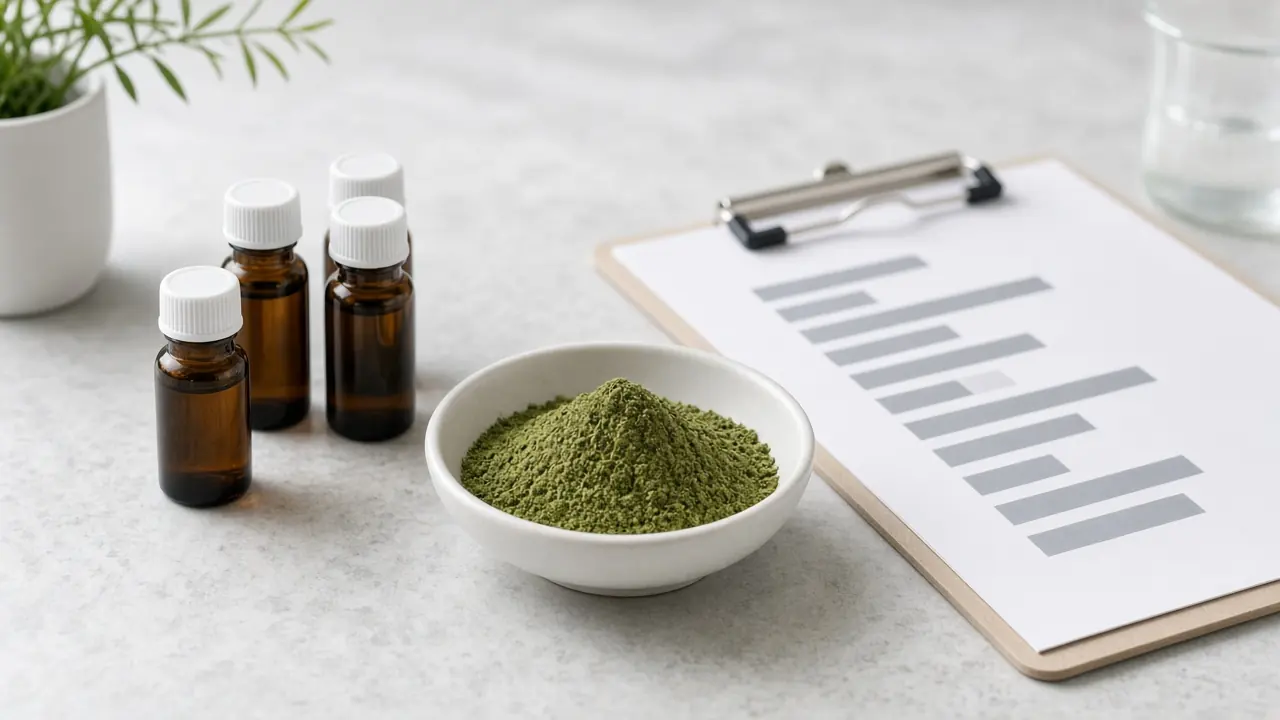
Ask for the fields in writing, in the quote, not as a hope after the goods move. Quality states the standing limit: a certificate covers the analytes you bought. It does not cover a test that was never requested.
For a destination that uses the October notice as its checklist, the useful lines are mitragynine percent and basis, 7-OH percent with the limit of quantification, MGPI if you need that line as well, the ratio calculated from those masses, the method (HPLC or LC-MS, named enough for your quality file), the laboratory accreditation, and the lot number. The lot number should match the invoice and the packs.
- Mitragynine percent, with the reporting basis
- 7-OH percent, with the limit of quantification
- MGPI if your destination file asks for it
- Mitragynine to 7-OH (and MGPI, if present) ratio
- Method, such as HPLC or LC-MS
- Laboratory accreditation
- Lot number matched to the invoice and the packs
State and local rules are a second map
Federal timing does not pause local rules. On 23 October 2026 the Georgia Attorney General told a House study committee that convenience stores should pull kratom products, and he described a model in which kratom-derived products would be presumed unlawful unless they were on a short state-approved list. That is a proposal in a press release, not a statute that has passed: https://law.georgia.gov/press-releases/2026-10-23/carr-calls-convenience-stores-remove-dangerous-kratom-products
On 21 to 22 October 2026 Streator, Illinois, was reported to have banned synthetic kratom, set alkaloid limits, required retailer certificates of analysis, and set an age floor for natural kratom: https://www.shawlocal.com/illinois-valley/2026/10/22/streator-joins-other-la-salle-county-communities-in-banning-synthetic-kratom/
Ulster County, New York, has been described in secondary reports as considering a local law on concentrated and synthetic 7-OH, with a hearing date that we could not confirm from the county page. Treat that item as unverified until you read the county record. The practical point is the one that is already certain: a distributor has to check the city and the county, not only the Federal Register. Short answers on who we sell to are on the FAQ.